
Recently, many programmers and tech enthusiasts have been discussing a tool: Codex.
In simple terms, Codex is an AI programming assistant launched by OpenAI. It is not just a chatbot that answers coding questions; it is an intelligent tool that can help you read code, modify code, run commands, fix bugs, write features, and perform code reviews.
If traditional AI Q&A can be likened to “consulting a knowledgeable person in technology,” then Codex is more like “inviting a programming partner who can get the job done.”
What Can Codex Do?
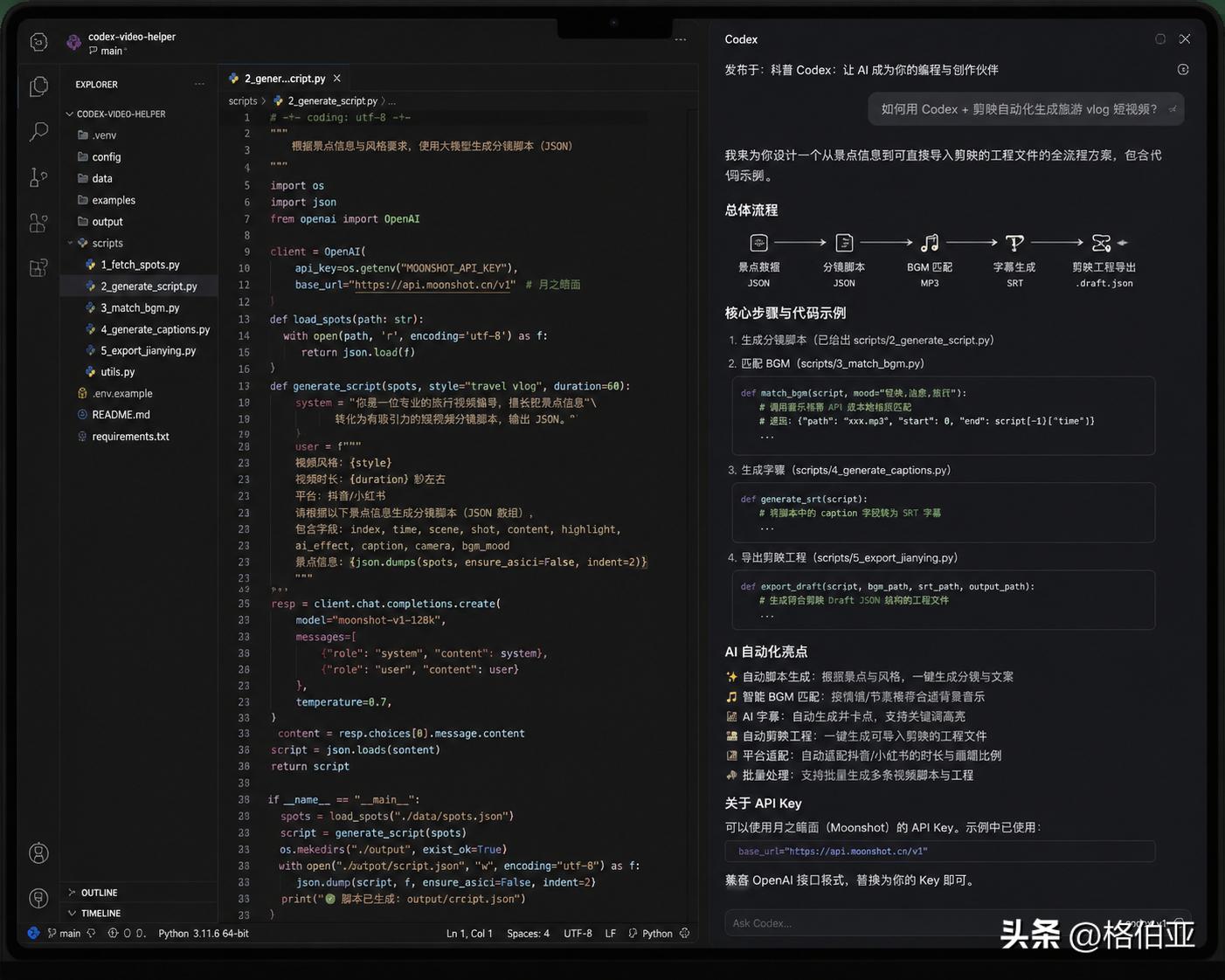
Codex can primarily assist you with the following tasks:
- Understand Code Projects
For instance, if you take over an unfamiliar project, you can ask Codex to explain the directory structure, core logic, or the purpose of a specific file. - Write New Features
You can directly tell it: “Help me add a login page” or “Add pagination to this API,” and it will attempt to modify the code. - Fix Bugs
When encountering error messages, you can let Codex analyze the cause and suggest a fix. - Run Tests and Check Code
Codex can run test commands in permitted environments to see if the modified code works correctly. - Code Review
It can help you review Pull Requests, identifying potential issues such as logical errors, security vulnerabilities, and missing tests.
How Is It Different from Regular ChatGPT?
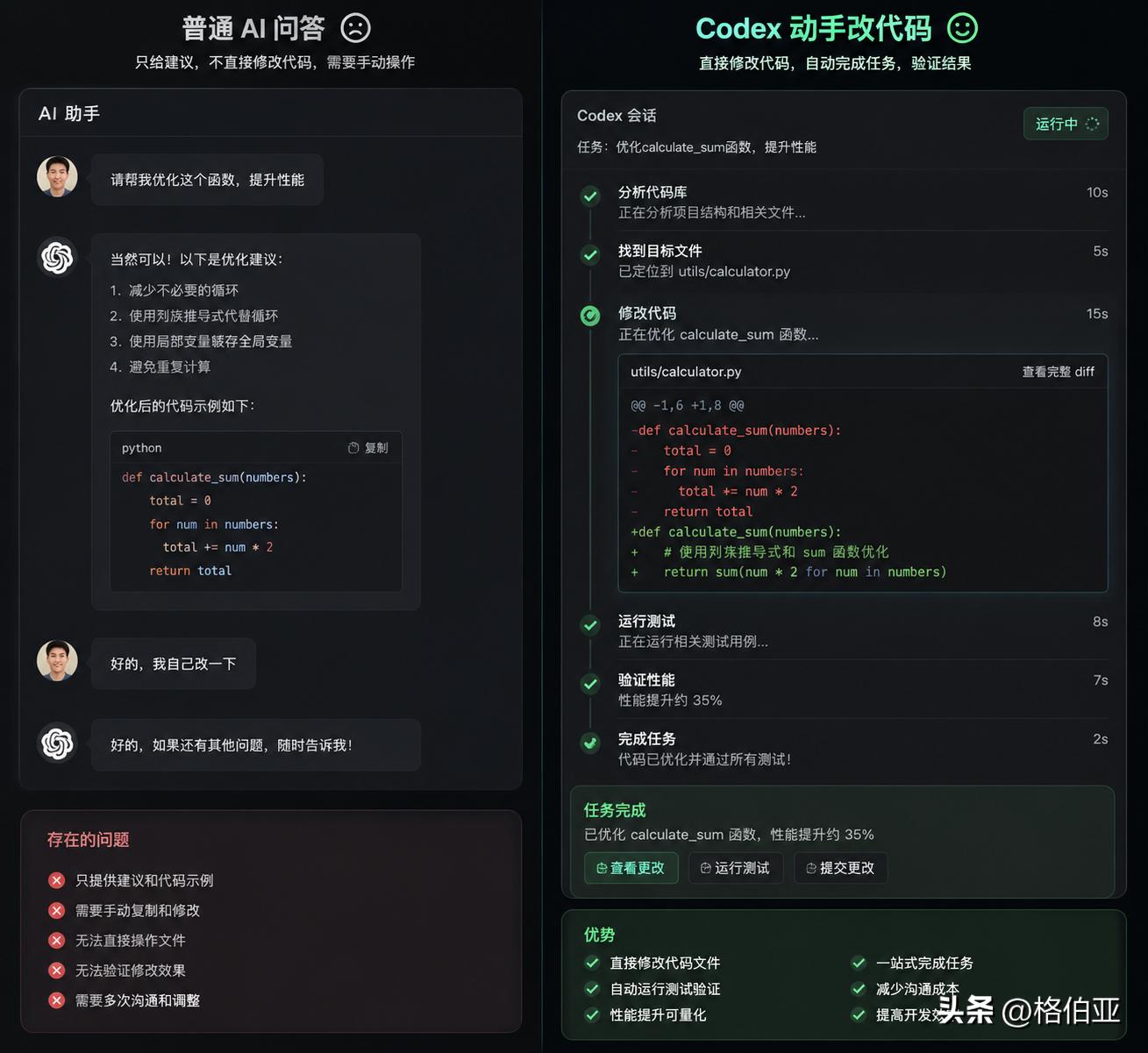
While regular ChatGPT is more about “answering questions,” Codex emphasizes “completing tasks.”
For example:
You ask regular AI:
“How do I resolve this error?”
It might provide you with an explanation and suggestions.
You ask Codex:
“The project failed to start, help me check and fix it.”
It can look at project files, analyze dependencies, suggest modifications, and even directly change code and run tests with your authorization.
In other words, Codex is closer to a collaborative AI engineering assistant.
What Are the Ways to Use Codex?
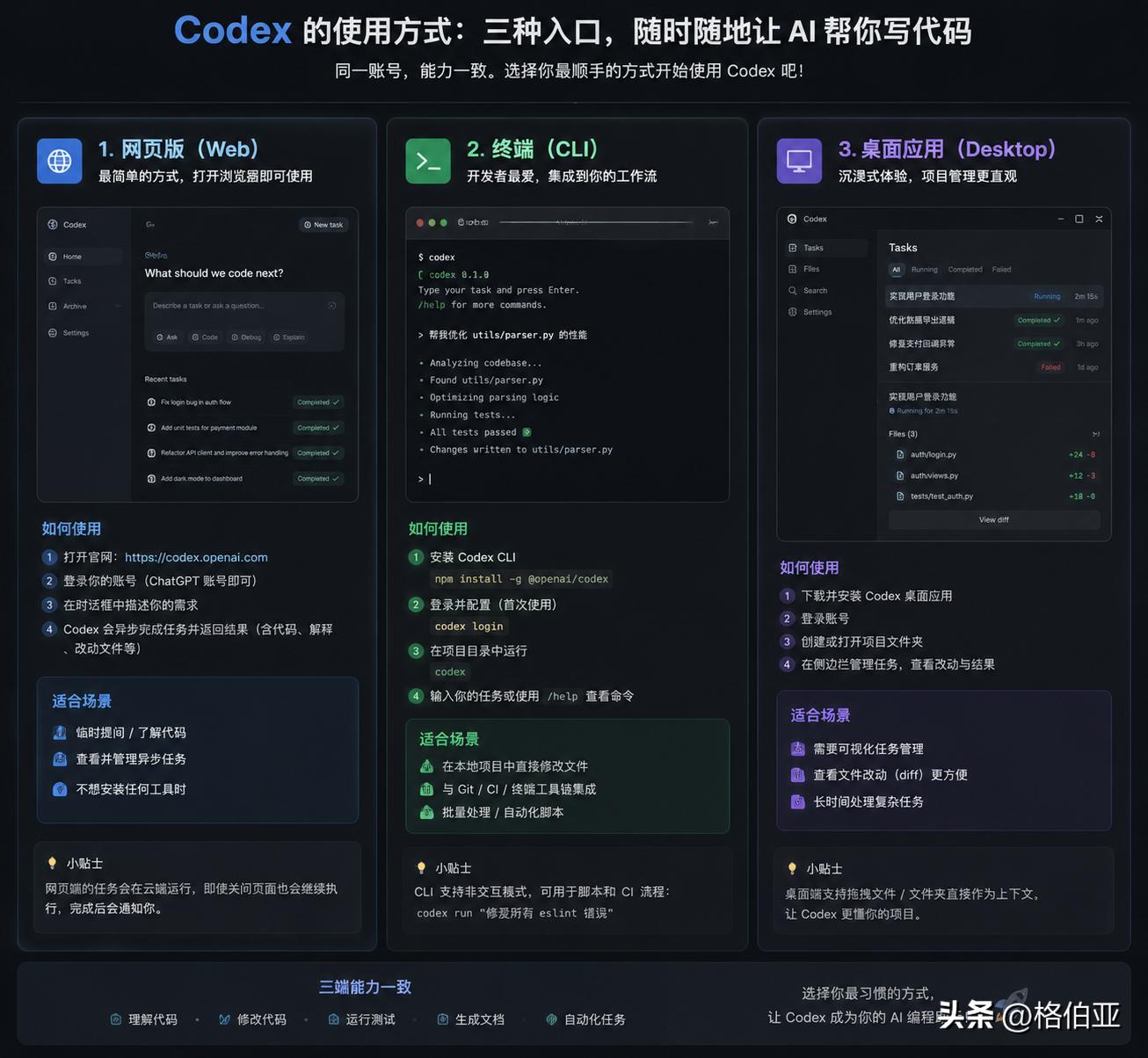
Currently, Codex can be used in various ways, such as:
- Codex in ChatGPT
- Codex CLI command line tool
- Codex desktop application
- Integration in IDE or code workflows
- Cloud-based task environments
According to OpenAI’s official introduction, Codex can assist developers with engineering tasks locally or in the cloud and can handle multiple tasks in parallel. For teams, this means that some repetitive tasks can be handled by AI first, allowing humans to review and oversee.
Can Ordinary People Use Codex?

Yes, but it depends on what you want to do with it.
If you have no programming knowledge, Codex can help you understand code, generate simple scripts, or create small tool prototypes. However, for formal project launches, it is still necessary for a knowledgeable person to review.
If you are a programmer, the value of Codex becomes more apparent. It is suitable for:
- Quickly understanding legacy projects
- Writing repetitive code
- Fixing simple bugs
- Generating tests
- Conducting code reviews
- Assisting in refactoring
- Writing technical documentation
It cannot completely replace programmers but can significantly reduce some tedious tasks.
What Should You Be Cautious About When Using Codex?

Codex is powerful, but it should not be blindly trusted.
When using it, it is advisable to keep three points in mind:
- Always manually check important code.
AI-generated code may run but may not be the best solution. - Be aware of privacy and company code permissions.
Understand whether data and code will be sent, saved, or used for training before using. - Review commands before execution.
Especially for operations like deleting files, modifying configurations, or installing dependencies, do not confirm casually.
AI is an assistant, not the final decision-maker. Before going live, developers still need to make judgments.
Who Is Codex Suitable For?
Codex is particularly suitable for:
- Programmers: to improve development efficiency
- Students: to assist in learning programming
- Product Managers: to quickly validate small tool ideas
- Startup Teams: to save early development time
- Technical Leaders: to assist in code reviews and project maintenance
Especially in scenarios with “large codebases, many tasks, and tight deadlines,” the value of Codex becomes even more pronounced.
Conclusion
Codex can be understood as OpenAI’s “AI programming partner.”
It can read code, write code, modify code, run tests, and help you review code and understand projects. It will not make programmers obsolete but will change how programmers work: many basic, repetitive, and tedious development tasks may be handled by AI first, allowing humans to focus more on design, judgment, and oversight.
In summary:
Codex is not a simple chatbot, but an AI assistant that can participate in the software development process.
Comments
Discussion is powered by Giscus (GitHub Discussions). Add
repo,repoID,category, andcategoryIDunder[params.comments.giscus]inhugo.tomlusing the values from the Giscus setup tool.