Transforming Education in the Age of AI
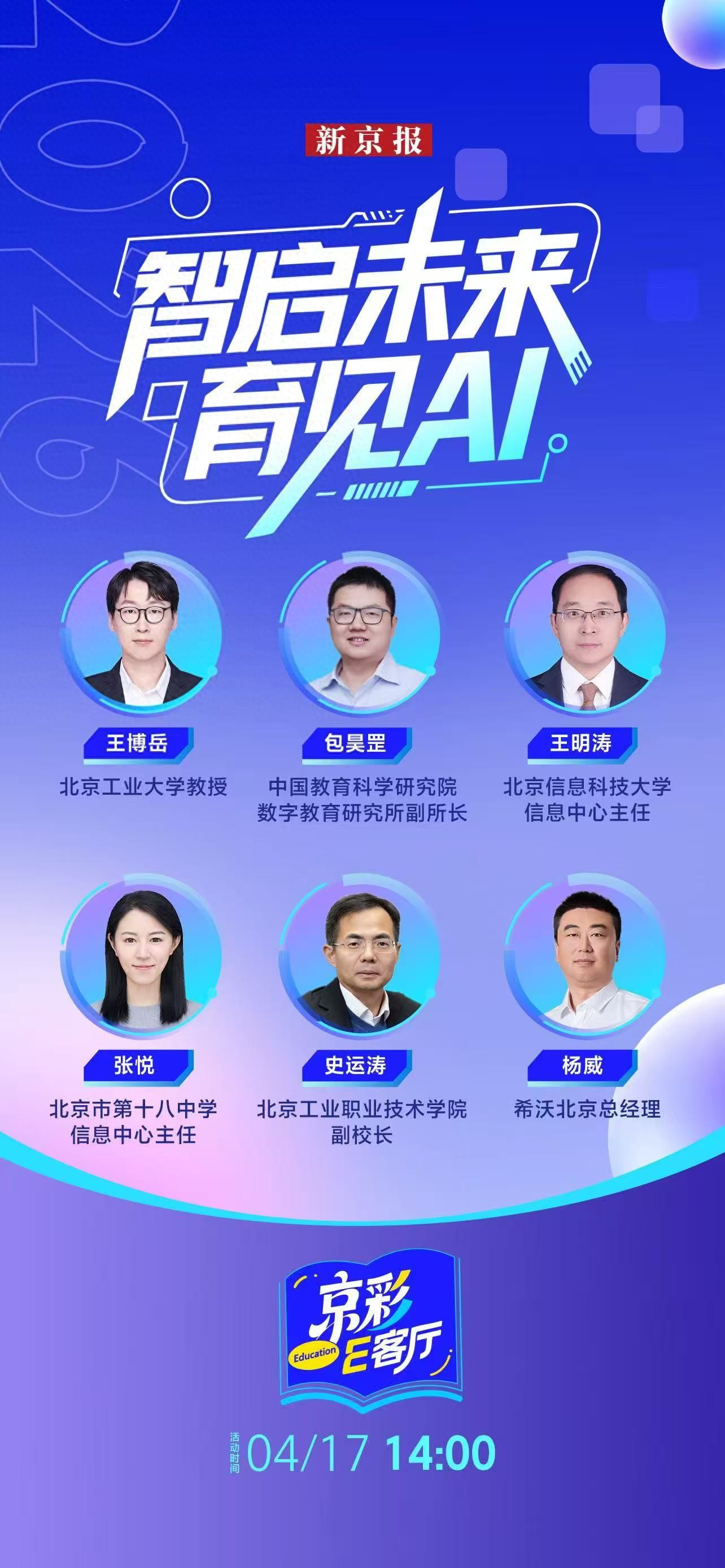
In the era of artificial intelligence, the foundational logic of education is being rewritten. On April 17, a closed-door seminar organized by the Beijing News gathered experts from universities, primary and secondary schools, research institutions, and educational enterprises to discuss the paradigm shift in teaching and learning in the AI age.
Experts at the seminar believe that AI is forcing a systemic transformation in education, shifting the teaching paradigm from a binary model of “teacher-student” to a triadic collaboration of “teacher-machine-student.” Teachers are evolving into designers of learning ecosystems, while students become technological collaborators. However, ethical risks cannot be overlooked, necessitating reforms in traditional teaching and evaluation systems, as well as the establishment of multi-layered prevention mechanisms.
Reshaping Teaching Paradigms Towards Triadic Collaboration
On April 10, five departments, including the Ministry of Education, jointly issued the “AI + Education Action Plan.” In response to this policy, Bao Haogang, deputy director of the Digital Education Research Institute of the Chinese Academy of Educational Sciences, stated, “In the digital intelligence era, the boundaries of human capabilities in creating tools are being redefined, leading to profound changes in social division of labor. The goal of education must shift towards cultivating talents who can harness AI and face the future, with a greater emphasis on the return to human values.”
The arrival of the AI era is compelling education to undergo systemic changes. What will happen to courses and classrooms when AI can grade essays, generate exam questions, and act as teaching assistants? Changes are already evident in higher education. Wang Boyue, a professor at the School of Artificial Intelligence at Beijing University of Technology, observed that programming assignments previously completed by first-year students, which focused on simple interfaces and basic functions, have shown significant improvement in completion and innovation since last year. “The interface and function design have become more sophisticated, with many first-year students able to fine-tune personalized vertical domain models using AI tools.”
Wang believes that the traditional classroom model, which primarily relies on PPT lectures and basic coding instruction, is being reshaped. Teachers are no longer just explaining knowledge points and code details; they are now posing questions, designing ideas, organizing discussions, and guiding students to use AI tools to achieve their goals. Practical classes have shifted from writing basic code to designing high-quality prompts, quickly implementing functions, and continuously iterating and optimizing solutions, allowing students to focus more on problem analysis, system design, and innovative practice. “This also raises higher demands for teachers’ digital literacy, teaching innovation capabilities, and ability to harness AI tools.”
Wang Mingtao, director of the Information Center at Beijing Information Science and Technology University, pointed out that with rapid technological advancements, teachers can no longer rely on traditional knowledge transmission methods for teaching. Traditional examination and evaluation methods have also become outdated, necessitating reforms in how students and teachers are assessed. He revealed that Beijing Information Science and Technology University is revising its training programs to incorporate AI elements into every major.
“As AI enters the classroom, the role of teachers as knowledge authorities is being challenged, but this does not diminish their role; rather, it catalyzes a profound evolution of their responsibilities,” said Zhang Yue, director of the Information Center at Beijing No. 18 Middle School.
Zhang emphasized that teachers must transition from traditional knowledge authorities and lecturers to designers of learning ecosystems and facilitators of cognitive collaboration processes. Students’ learning paradigms will also change, evolving from passive recipients of knowledge to active explorers and technological collaborators. Students need to master skills for efficient and critical collaboration with AI, including formulating precise instructions, questioning and verifying information authenticity, and synthesizing diverse viewpoints, while actively constructing knowledge through solving real and complex problems.
Shiyuntao, vice president of Beijing Industrial Vocational Technology College, believes that the enhancement of teachers’ capabilities depends on the transformation of educational infrastructure. Without established computational power in classrooms and large model platforms in schools, it is challenging for teachers to achieve significant improvements. He metaphorically stated, “The vehicle is already an electric car, but the road is still a dirt path.”
Preventing Ethical Risks Associated with AI
The “AI + Education Action Plan” emphasizes the need to effectively prevent issues such as AI-generated fraud, academic dishonesty, examination pressure, and privacy breaches. The ethical risks posed by AI have become a focal point of discussion at the seminar.
This issue is equally significant in primary and secondary education. Bao Haogang disclosed data from a nationwide survey conducted by the Chinese Academy of Educational Sciences, covering 31 provinces and over 650,000 samples. The results showed that 99.7% of surveyed students had encountered AI, and 85.6% had attempted to use AI while doing homework, indicating a situation that exceeds expectations but also carries certain risks.
He further pointed out that while establishing technological firewalls, education must undergo systemic reform. Traditional knowledge-based examinations and assignments should not be used to evaluate students. Instead, tasks should be assigned from a problem-solving perspective, involving non-structured, complex scenarios where students can use AI but should not let AI provide direct answers. Instead, they should “collaborate” or even “argue” with AI to cultivate their ability to harness AI effectively.
Bao Haogang particularly emphasized the importance of regulation. He believes that unlike adults who possess complete knowledge systems and can use AI critically, middle and primary school students have yet to establish their cognitive frameworks. Current research indicates that early reliance on AI may lead to distortions in cognitive development, attention, and innovation capabilities.
Wang Mingtao from Beijing Information Science and Technology University advocates for a positive and cautious attitude towards technology, embracing the opportunities it brings while also mitigating risks. In addition to technological regulation, cognitive guidance from the perspective of curriculum ideology is essential, with parents and teachers participating in correctly guiding children in using AI.
Zhang Yue shared the practice from No. 18 Middle School, which has standardized AI usage into three lists: the “Sovereignty List” clarifies that ultimate evaluation and decision-making power regarding values always belongs to teachers; the “Prohibited List” delineates behaviors that are absolutely forbidden, such as inputting private data and delegating core thinking processes; and the “Audit List” requires documentation of AI-assisted processes for review. They also iteratively implement the student-initiated “Generative AI Application Initiative,” where each graduating class upgrades and passes the initiative to incoming first-year students, forming AI teams for supervision.
Zhang emphasized that in the triadic ecosystem, AI is responsible for resource generation, preliminary data analysis, and process automation, but all its actions must operate within the educational framework and ethical boundaries set by teachers. “AI lacks emotional agency and ultimate value judgment, which are exclusive human capabilities.”
In her view, the collaboration between “teachers” and “AI” hinges on establishing clear responsibilities and collaboration interfaces. She cited that in practice, No. 18 Middle School particularly emphasizes “predefined roles and dynamic switching.” For instance, during the design phase of project-based learning, teachers clearly delineate the “green development zone”—tasks such as designing scientific experiments and making ethical decisions must be completed by students without AI assistance.
Yang Wei, general manager of Heweo Beijing, suggested adopting a youth model similar to gaming platforms, restricting minors’ AI usage time and functions through real-name authentication.
Bao Haogang stressed that the development of technology should allow for controlled trial and error and discussion, avoiding the pitfalls of over-caution or blind application, with risk governance dynamically advancing alongside the deepening application.
Promoting AI + Education from Pilot to Replicable Models
“AI has a particularly significant impact on vocational education, as the barriers to software development have lowered, greatly affecting software programming careers,” shared Shiyuntao, vice president of Beijing Industrial Vocational Technology College. He noted that new digital occupations are emerging, such as industrial robot system operators and data cleaning specialists. “To meet the new requirements for vocational talents in the industry, many vocational college students are trained in simulated scenarios of family services and intelligent manufacturing, wearing virtual devices for training.”
“For example, in high-end machine tool operation skills, we capture multimodal data from videos, paired with textual explanations, transforming them into digital resources that students can access anytime through AI for learning.” He stated that vocational colleges in Beijing are no longer just training traditional electricians, fitters, and welders. “In factories without manual labor, warehouse AGV vehicles (automated guided vehicles) are entirely controlled by software and code, and students must possess capabilities in intelligence, networking, and digitization.”
Shiyuntao introduced that their college is one of the 60 benchmark schools under the “Double High Plan,” and last year invested heavily in computational power and digital infrastructure, collaborating with Tsinghua University’s Zhipu Qingyan team to create a vertical model for industry-education integration covering aerospace equipment manufacturing and other industrial chains, establishing a new digital education ecosystem for cultivating “high-end digital craftsmen.”
Wang Mingtao shared experiences from Beijing Information Science and Technology University in building an AI ecosystem: promoting learning through competitions, facilitating research through management, and fostering interaction between teachers and students. The university is also one of the first pilot schools for the future smart academy construction in Beijing, creating a trend of valuing and applying AI from top to bottom. The intelligent hardware “AI Bistu” developed by student clubs has appeared in various scenarios, including enrollment promotion, campus open days, trade fairs, and the Beijing Science and Technology Expo, garnering widespread social impact.
In the education sector, the application of AI has transitioned from initial exploration to real-world implementation. How to create high-value, replicable application scenarios? Wang Mingtao pointed out that the current integration of AI technology and education is still insufficient, with many applications remaining superficial. He suggested that the implementation of the action plan should focus on comprehensive AI literacy education as the foundation for all application scenarios, while also selecting and nurturing typical AI application scenarios across various educational stages for replication and promotion citywide.
Bao Haogang noted that the action plan specifically mentions “building national AI (education) application pilot bases” to scale up small-scale innovations, identifying high-value, replicable scenarios that bridge industry, academia, and research. “Teachers should be encouraged to take the lead in trials; their experiences and feedback are crucial for assessing the value of scenarios.”
Wang Boyue suggested that to enhance teachers’ enthusiasm for using AI to drive educational innovation, real-world corporate scenarios, practical projects, and industry demands should be integrated, optimizing and improving the teacher assessment and evaluation system, guiding higher education teachers to participate in course design and teaching system construction, deepening industry-education integration, and ensuring the successful implementation of the “AI + Education” action plan.
Yang Wei candidly stated that the development of vertical large models for education is relatively lagging; many general large models exist, but there are few specifically designed for educational scenarios. He called for more enterprises to participate in the development of educational vertical large models, as having more models in the education vertical will foster competition among enterprises, leading to continuous self-improvement and promoting ecological prosperity.
Comments
Discussion is powered by Giscus (GitHub Discussions). Add
repo,repoID,category, andcategoryIDunder[params.comments.giscus]inhugo.tomlusing the values from the Giscus setup tool.