Apple’s Major Mistake
Apple has made a significant error by bundling its internal Claude.md file into an official app update. This incident confirms that Apple is using Claude Code to build production-level applications.
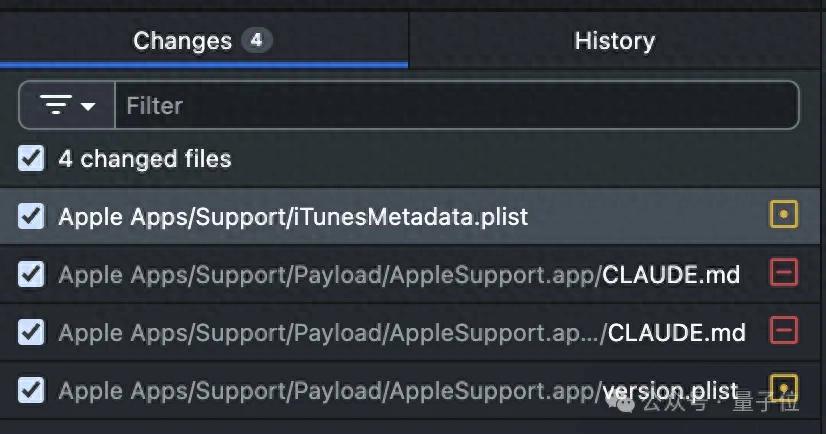
Claude.md is typically used to inform AI about project specifications, construction methods, guidelines, and potential pitfalls. Despite being one of the most secretive tech companies globally, Apple has inadvertently leaked its internal secrets.
Following the incident, Apple quickly retracted the update within 24 hours, but some content had already been exposed.
This situation is reminiscent of when the source map was included in the release version during the Claude Code source leak. Could both incidents be attributed to Claude Code itself?

What Has Apple Developed with Claude Code?
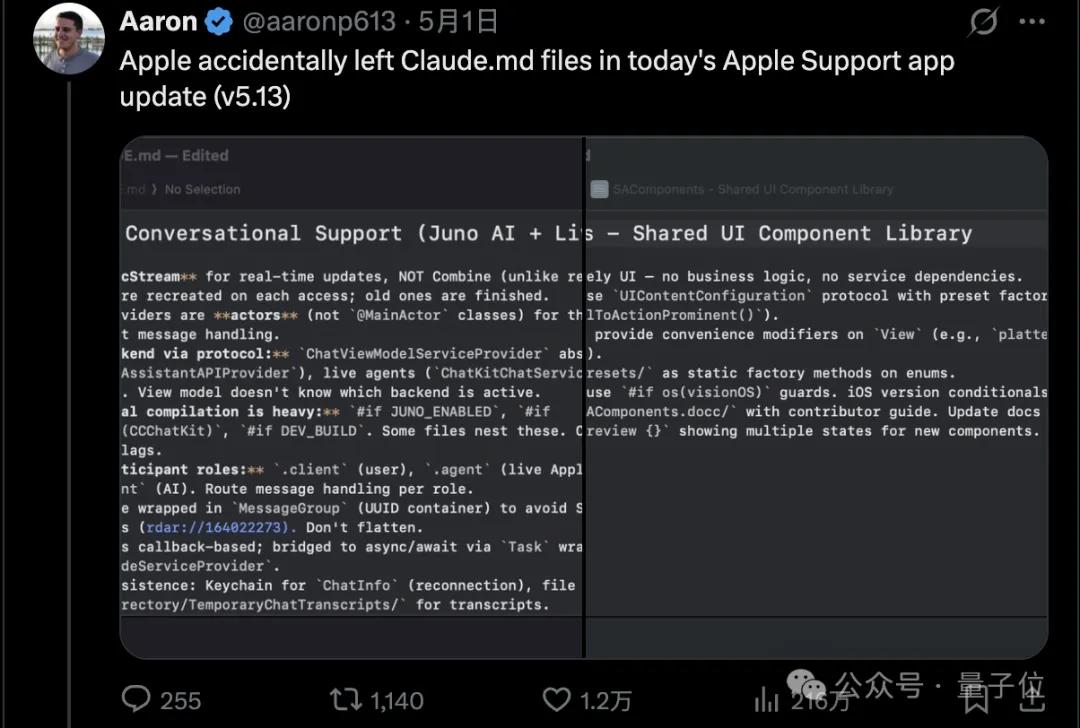
On May 1, the Apple Support app pushed an update to version 5.13, which unexpectedly included Claude.md. Aaron Perris, an analyst from MacRumors, discovered and revealed this information.
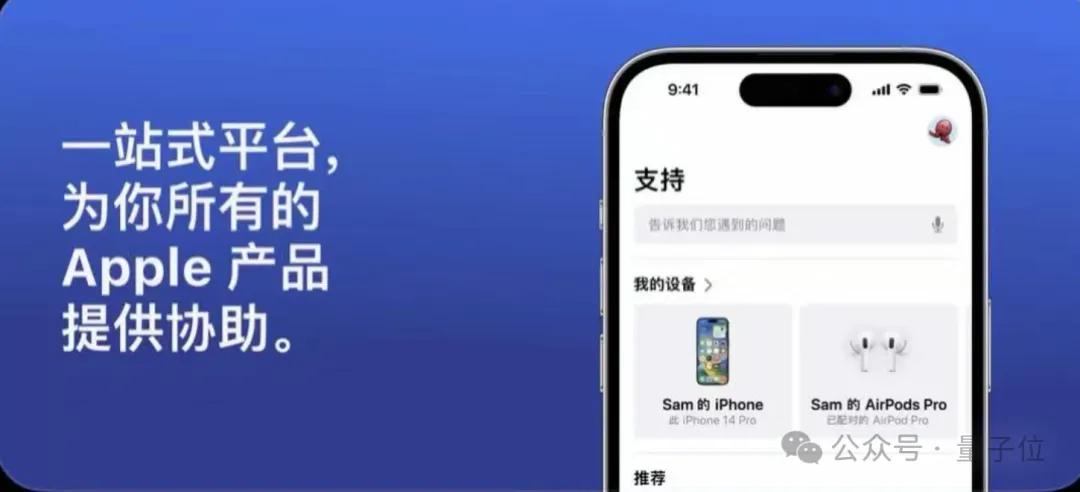
The Apple Support app is designed for after-sales service, allowing users to chat online with Apple experts for troubleshooting, repair appointments, and purchasing Apple Care services.
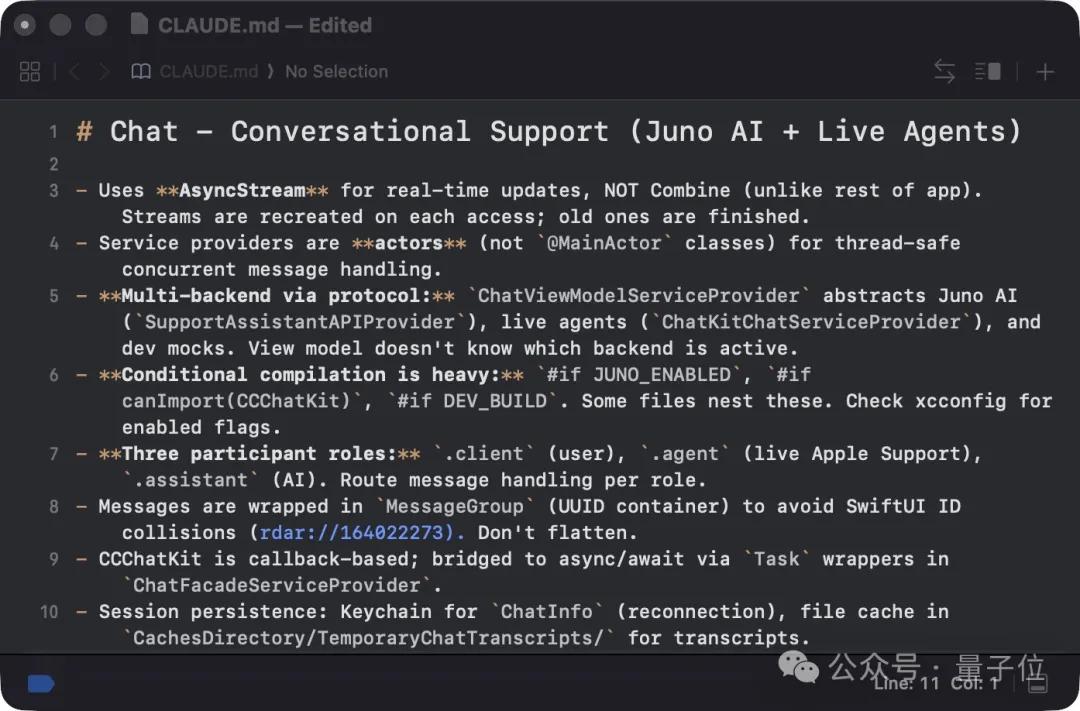
The leaked Claude.md outlines a complete architecture for a dialogue system, with a core design featuring a dual backend system: Juno AI for automated responses and Live Agents for human customer service.
The two backends switch seamlessly through a Protocol layer, with the upper-level code unaware of whether a message is from a human or AI.
Interestingly, the messaging system is designed with three roles: the client (user), agent (human customer service), and assistant (AI). Messages from these three identities follow the same processing flow, without notifying users whether they are interacting with a human or a machine.
Thus, the technical framework of Apple Support’s customer service is essentially clear: a dialogue system that seamlessly switches between AI and human agents.
Another leaked module, SAComponents, did not reveal any significant information; it is merely a UI component library without business logic, accompanied by DocC documentation—a standard engineering product.
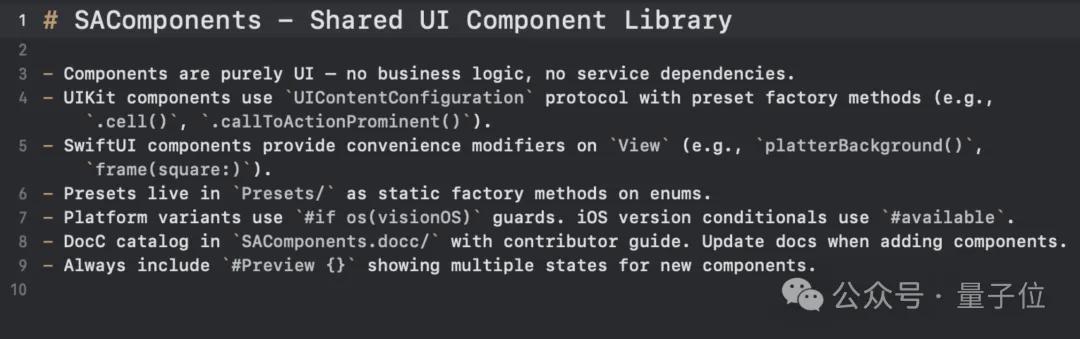
While the file itself did not leak any confidential information, it confirms something that many have speculated but lacked concrete evidence: AI is ubiquitous within Apple. More specifically, Claude is everywhere.
Apple’s Dependence on Anthropic
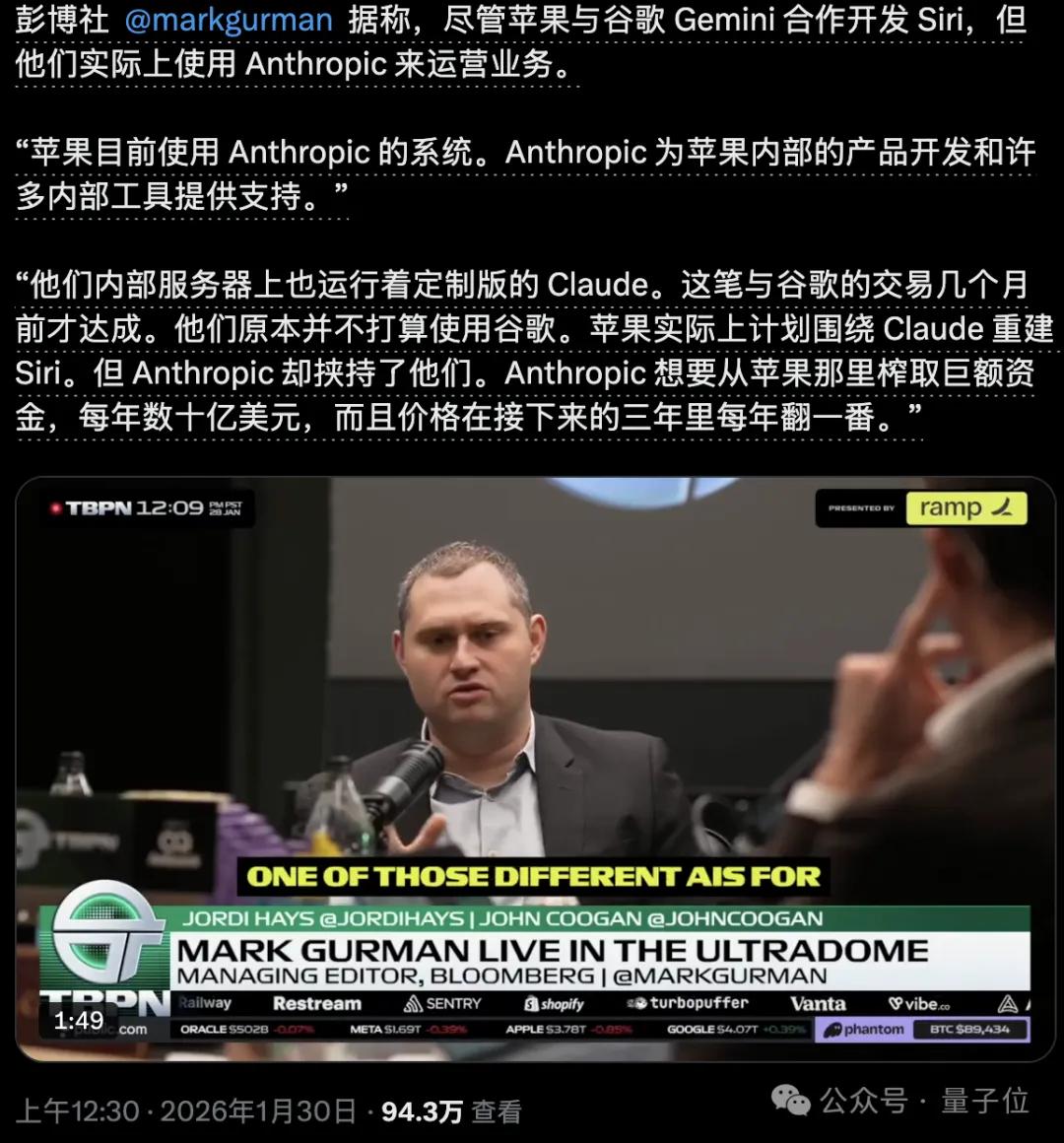
Interestingly, three months prior, Mark Gurman from Bloomberg, who is well-acquainted with Apple, stated:
Apple runs on Anthropic at this point.
Gurman noted that Apple is running a custom version of the Claude model on its own servers. Internal code, documentation, and tokens all remain within Apple’s infrastructure, aligning with its longstanding privacy stance: using AI is acceptable, but data must not leave the premises.
Additionally, Apple has reached a partnership with Google, with Gemini set to replace the old Siri. However, for internal development tools, Apple has opted for Claude instead of Gemini.
Of course, it’s essential to view this situation with balance. A user on HackerNews, claiming to be a former Apple employee, pointed out that there are hundreds of isolated teams within Apple. The fact that some teams use Claude does not imply that the entire company is engaged in vibe coding.
A survey of 120,000 developers revealed that 92.6% use AI coding assistants at least once a month. Apple’s use of Claude for coding is merely a reflection of the broader industry trend.
Thus, the issue is not whether Apple uses AI for coding; everyone does. The real concern is that even Apple can mistakenly push files that should not be submitted into production, which raises significant implications.
In the Age of AI, Who Reviews AI Code?
Should Claude.md be included in version control? Developers are divided.

One camp believes it is project documentation that should be included in the code repository for team sharing. The other side argues it resembles IDE configuration and should be placed in .gitignore for individual use.
However, the more awkward issue is not whether it should be submitted, but how it ended up in the release package after being submitted.
Some are puzzled as to why Apple, while using AI agents to write and deploy code, did not explicitly require the Claude.md file to be excluded from the push.
The problem may lie with Claude Code itself, which often selectively ignores instructions, regardless of how many times they are repeated.
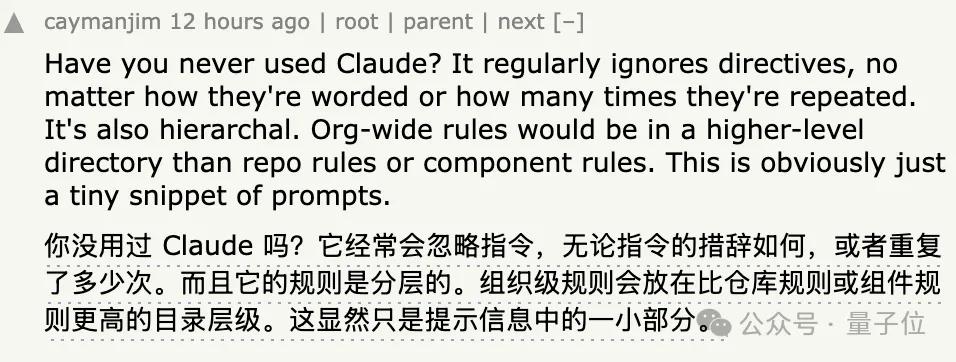
A highly upvoted comment summarizes the essence of this situation:
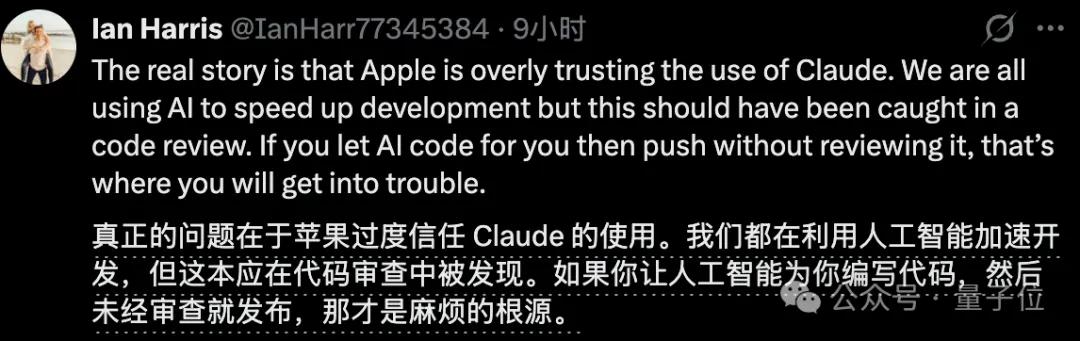
The real issue is not that Apple is using Claude, but that Apple trusts Claude too much. Everyone is using AI to accelerate development, but this should be caught by code reviews.
An Apple engineer is likely experiencing the worst day of their career, while Anthropic’s sales team is having the best day ever.
Comments
Discussion is powered by Giscus (GitHub Discussions). Add
repo,repoID,category, andcategoryIDunder[params.comments.giscus]inhugo.tomlusing the values from the Giscus setup tool.