Will AGI Really Arrive in 3 to 7 Years?
- Regarding AGI (Artificial General Intelligence), as some leading AI experts in the US suggest, could it really arrive in 3 to 7 years?
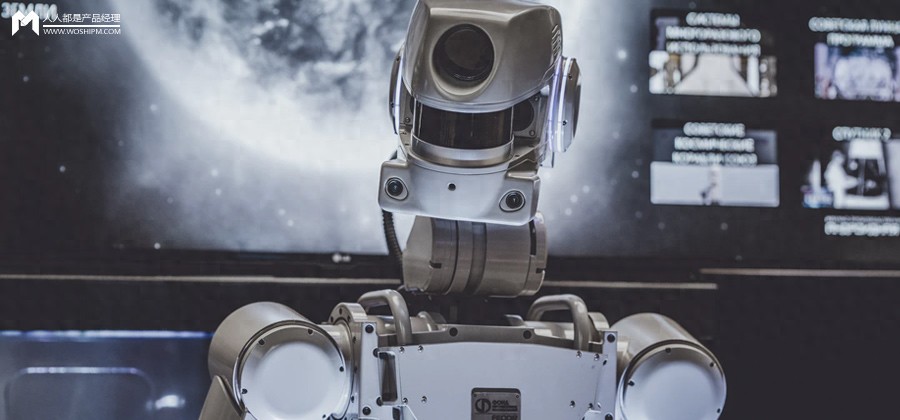
Most people glance over these reports without much thought.
But, have you considered that this could actually be true?
A similar example has occurred in human history —
- The Atomic Bomb.
Recently, I read an article stating that three years before the atomic bomb was developed, top scientists predicted that “the atomic bomb would likely be created in three years.”
Why could they say that?
Because at that time, they had solved several core, milestone breakthroughs.
In other words, the most critical and difficult problems had been overcome; the overall framework and system were essentially clear; thus, the remaining issues were mostly defined and relatively manageable “workload” (engineering problems).
With more time, manpower, and resources invested, they were likely to reach their goal (at most a delay of a year or two).
- Back to AI.
In the last couple of years, top AI practitioners in the US have made similar assertions, with a similar underlying logic.
They believe that the core cognitive frameworks and potential pathways are now largely clear; the remaining challenges should be relatively “predictable.”
Whether the ultimate leaders are OpenAI, Anthropic, or others, the overall direction is rapidly advancing.
- Why should we pay more attention to these judgments?
As mentioned before, there is a concept of “circles.”
When observing interviews each quarter, one might feel there are many new inputs, but that’s only the part they can publicly share; the cognitive and informational gaps among the top AI experts are beyond our imagination.
For example, in a detail from the AI Daily on November 13, 2024:
“In 2012, Hinton’s team’s neural network AlexNet won at ImageNet, causing a global sensation. Yukai said, ‘No one was more shocked than I was because I was the first champion, and I knew what it meant to improve accuracy from 75% to 85%.’
Thus, he immediately emailed Hinton, expressing his eagerness to collaborate, which inspired Hinton to initiate an auction that ultimately led to a $44 million acquisition by Google…”
While we may occasionally feel “surprised,” the feelings of those at the forefront are often “shaken.”
- This means that I have suddenly begun to take seriously the possibility: AGI (or significantly “beyond human imagination” levels of AI) could indeed arrive in 3 to 7 years!
This could bring about significant changes, impacting our work and humanity itself.
Note: This article does not claim that AGI will “definitely” arrive in any specific year, but rather suggests it will likely come much sooner than previously thought.
If we do not think ahead or prepare mentally, it could be very dangerous.
If we start to contemplate and prepare in advance, there will also be tremendous opportunities. For example, what opportunities might arise? —
Where to Go After Losing Jobs to AI?
- It has been mentioned that as AI develops, it could lead to a “crowd trampling effect” — the first wave may displace jobs at the 60th percentile, requiring these individuals to be resettled.
If those at the 60th percentile are not successfully transitioned, and AI continues to encroach on the 65th and 70th percentiles, it could lead to “crowd trampling,” potentially resulting in social issues.
- This issue itself will be a significant pain point and demand in the future, representing a growing market.
This also presents business opportunities; those who can address this well can profit.
- “Being replaced by AI, leading to unemployment,” is already happening.
In addition to the widely discussed groups like “designers,” I recently heard that a well-known core department in a major company quickly laid off corresponding employees after implementing AI for certain functions.
- What paths exist for those displaced by AI? Besides needing psychological support, there are also actual job transition pathways.
One potential avenue is transitioning to (specialized) data annotation positions.
- The logic here is that during the past decade of AI 1.0, the required standards were relatively basic and simple data. However, with the arrival of AI 2.0 and large models, basic data annotation tasks are quickly being automated, leaving behind more complex data that still requires human handling — which necessitates real professional experience, such as financial data annotation or human resources data annotation.
Thus, employees from finance or HR positions can transition to high-level data annotation roles in their respective fields after being replaced by AI.
- In fact, this is already happening!
For example, a certain bank has redirected laid-off employees to data annotation/AI trainer roles.
- Looking further ahead, if specialized high-level data annotation jobs are also completed, where can these individuals go?
Currently, one possibility is transitioning to become AI teachers in various schools.
For instance, various vocational and technical schools will need training on “how to apply AI in their industries.”
And this group of people (who have frontline experience and have done specialized high-level data annotation) is perfectly suited to teach this content.
Moreover, given the vastness of China, with so many people and schools, the work of “grassroots AI popularization” appears to have significant potential, supporting longer-term personnel resettlement needs.
I hope that people in the era of artificial intelligence robots can better navigate this transitional period.
I wish that friends reading this article can contribute their part in the future.
Comments
Discussion is powered by Giscus (GitHub Discussions). Add
repo,repoID,category, andcategoryIDunder[params.comments.giscus]inhugo.tomlusing the values from the Giscus setup tool.