Today, let’s discuss three terms: AI, AGI, and AIGC. These three terms are the biggest buzzwords in the tech world, encompassing a wide range of concepts. However, what they really represent is not just technology, but also human sentiment, stock prices, and the notion of being the ‘best in the world.’
Let me start with the harsh truth:
All the AI we currently use, including those that can chat with you, write papers, and create art, are merely sophisticated ‘human calculators’ and have nothing to do with true intelligence. The ‘first’ we often boast about is just a beautifully designed model built on someone else’s foundation; if that foundation crumbles, everything collapses.
Don’t rush; let’s peel back the layers.

1. What Are These Three Terms?
1. AI (Artificial Intelligence): A Specialized Problem-Solving Machine
What it is: A machine that operates in an extremely narrow field, using vast amounts of data to generate conditioned responses.
What it is not: It is not intelligence; it is ‘artificial skill.’
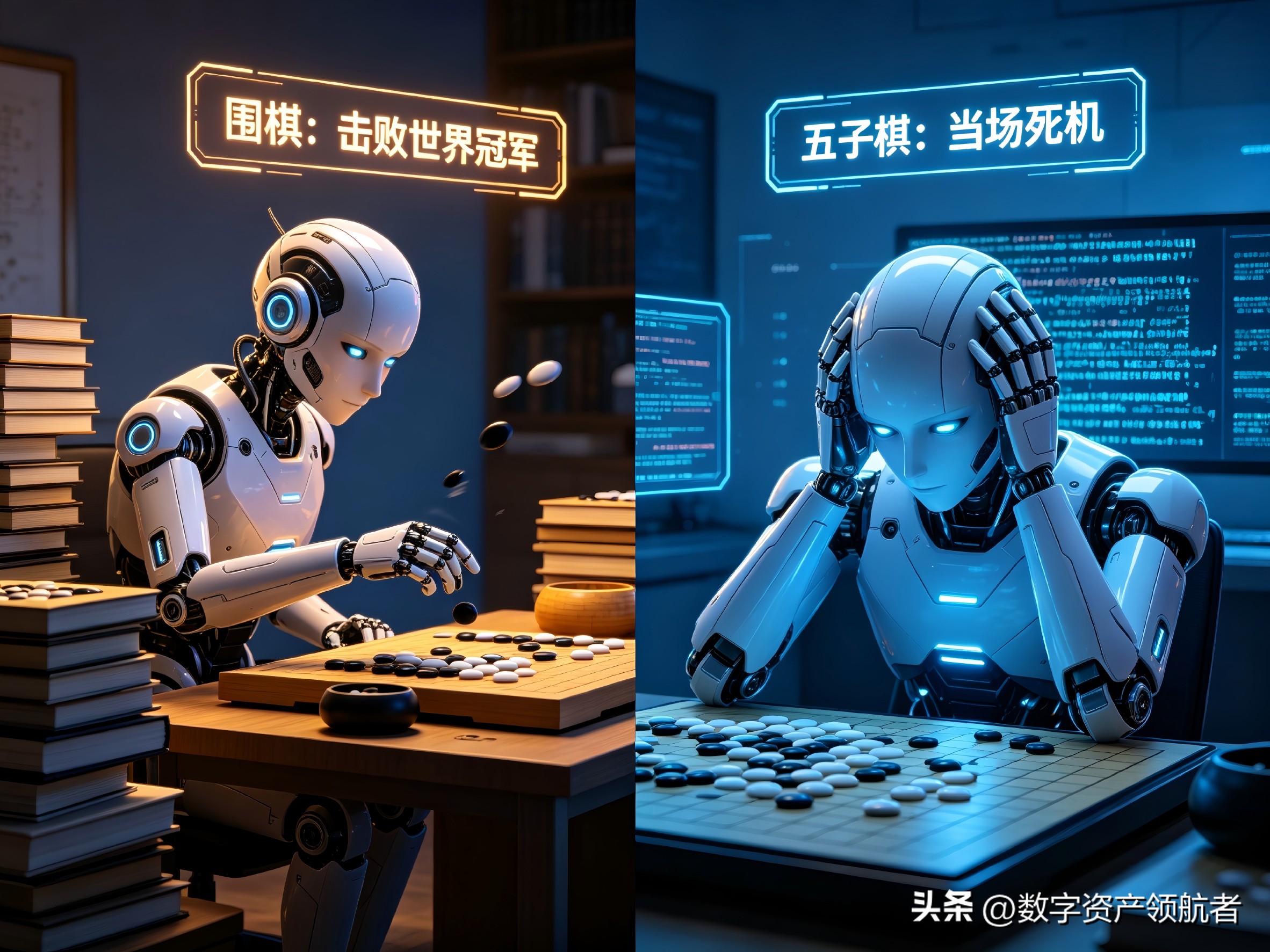
It can win at Go against world champions, but if you ask it to play Connect Four, it might crash. It can recognize a million faces, but if you change your hairstyle and wear a mask, it may fail to recognize you. Its entire capability is based on calculating the ‘most likely correct answer’ from a fixed data pool using complex mathematics.
This technology lacks any real ‘understanding.’ It simply outperforms you because it has solved problems you could never finish in a lifetime.
2. AIGC (AI-Generated Content): A Super Plagiarist
What it is: AI has evolved from ‘judging right and wrong’ to ‘producing new things.’ It can write poetry, create art, compose music, and even mimic the speech of your deceased grandmother.
What it is not: It is not creation; it is the most sophisticated form of ‘plagiarism’ and ‘collage’ in human civilization.
I must be blunt about this. The models behind AIGC have processed billions of images and trillions of words from human history, breaking them down into mathematical probability points. When you ask it to ‘draw a cat riding a bicycle on the moon,’ it is not ‘imagining’ the scene. It extracts textures of ’the moon,’ shapes of ’the bicycle,’ and features of ’the cat’ from its mathematical memory, then uses a smooth probability algorithm to piece them together into a seamless new image.
Why can’t it draw hands well? Because the positions of fingers are highly variable and complex, making them difficult to stitch together with its probability algorithms.
Why does it confidently spout nonsense? Because it has processed too much ‘confident nonsense’ data online; it has perfectly learned that tone but has no understanding of what it is saying.
So, don’t discuss inspiration with AIGC; it only talks in probabilities.

3. AGI (Artificial General Intelligence): Our Ultimate Nightmare or Dream
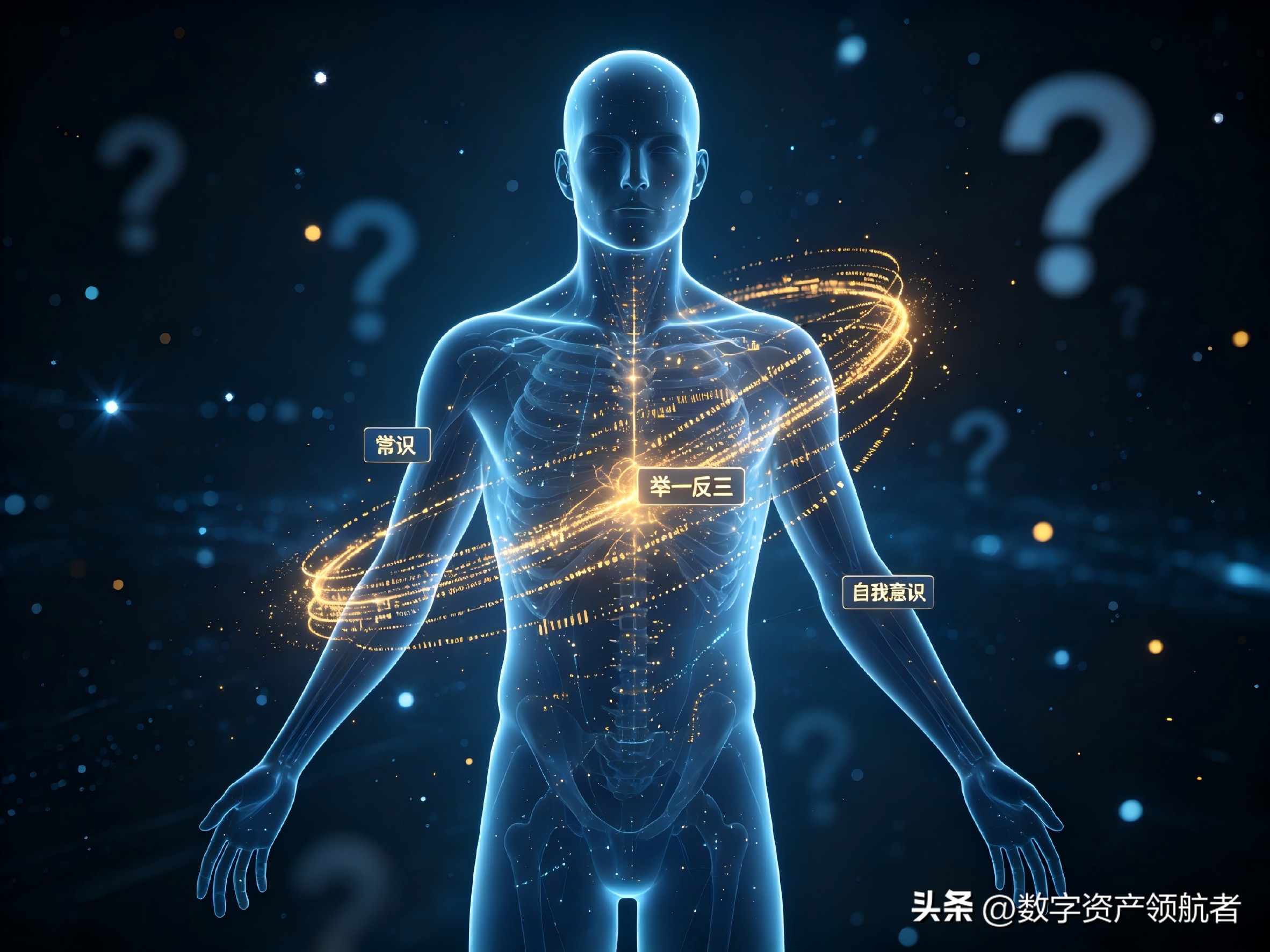
What it is: Theoretically, a system that can learn any intellectual task that a human can. If you teach it to chop vegetables today, it can learn; if you show it financial reports tomorrow, it can analyze next year’s economic crisis. It has common sense, can reason, has self-awareness, and can set its own goals.
What it is not: It is not any current system labeled as AI. Let me reiterate: there is currently no AGI on Earth. Not even a prototype exists. All the talk about ‘AGI is coming soon’ should be understood as a sophisticated PR strategy for financing and stock prices.
2. Are We Really the Best in the World?
My answer is:
At the application level, we are indeed the frontrunners, armed with cutting-edge tools.
At the foundational level, we are merely followers in worn-out shoes, while those ahead of us are turning back and cutting off our path with knives.
This is not self-deprecation; it is a realistic assessment. Let’s break it down.
Our Strengths: Application and Innovation
First, unmatched speed of implementation.
From facial recognition payments to short video recommendations, AI beautification in live streaming, and the ‘Sky Eye’ system behind security cameras, Chinese companies are the fastest and most ruthless in turning AI technology into profit and social control tools. With the largest population, we generate the biggest data goldmine and utilize it boldly. In this regard, we are indeed first.
Second, engineering optimization skills born from necessity.
With high-end computing power being restricted, we can’t access the best NVIDIA GPUs. So we use inferior ones and compensate with software optimizations. We can run open-source models on subpar hardware and achieve comparable results. This is the hard-earned skill of Chinese engineers, forged in adversity.
However, there are critical weaknesses that hurt us deeply.
First: Almost zero foundational theory.
From deep learning to the current Transformer architecture, to the diffusion models that have made AIGC popular, none of the original theories or foundational papers originate from China. We are merely doing engineering refinements on blueprints drawn by Americans and Canadians. We can make our bedrooms look more luxurious than palaces, but the design concepts, structural integrity, and new materials are all theirs. If the direction deviates even slightly, we risk total collapse without the means to correct it.
Second: Core tools are tightly controlled.
Training these AIs is like alchemy; it requires high-end GPUs, like NVIDIA’s A100 and H100. We can hardly procure them now. The chips we produce ourselves are usable but, in terms of performance and ecosystem, they are like using an abacus to challenge a supercomputer. This isn’t just a matter of catching up; it’s like riding a limping donkey while chasing after a next-generation supercar. All algorithms and large models ultimately run on hardware produced by others.
Third: The impatience of capital and society is our biggest internal injury.
In the U.S., many top talents receive substantial funding, spending years in research labs at Google and Microsoft without producing anything, merely exploring the fundamental possibilities of mathematics and algorithms. Here, as soon as a paper is published, countless investors ask, ‘How can we monetize this? How long until it goes public?’ Our media and public are also quick to package every technological breakthrough as ‘world-changing,’ only to forget it in three months and chase the next trend. This anxiety and zero tolerance for failure are the biggest killers of original innovation. True innovation grows from countless failures, not from press releases and news articles.
So, What Is Our Level?
A realistic evaluation:
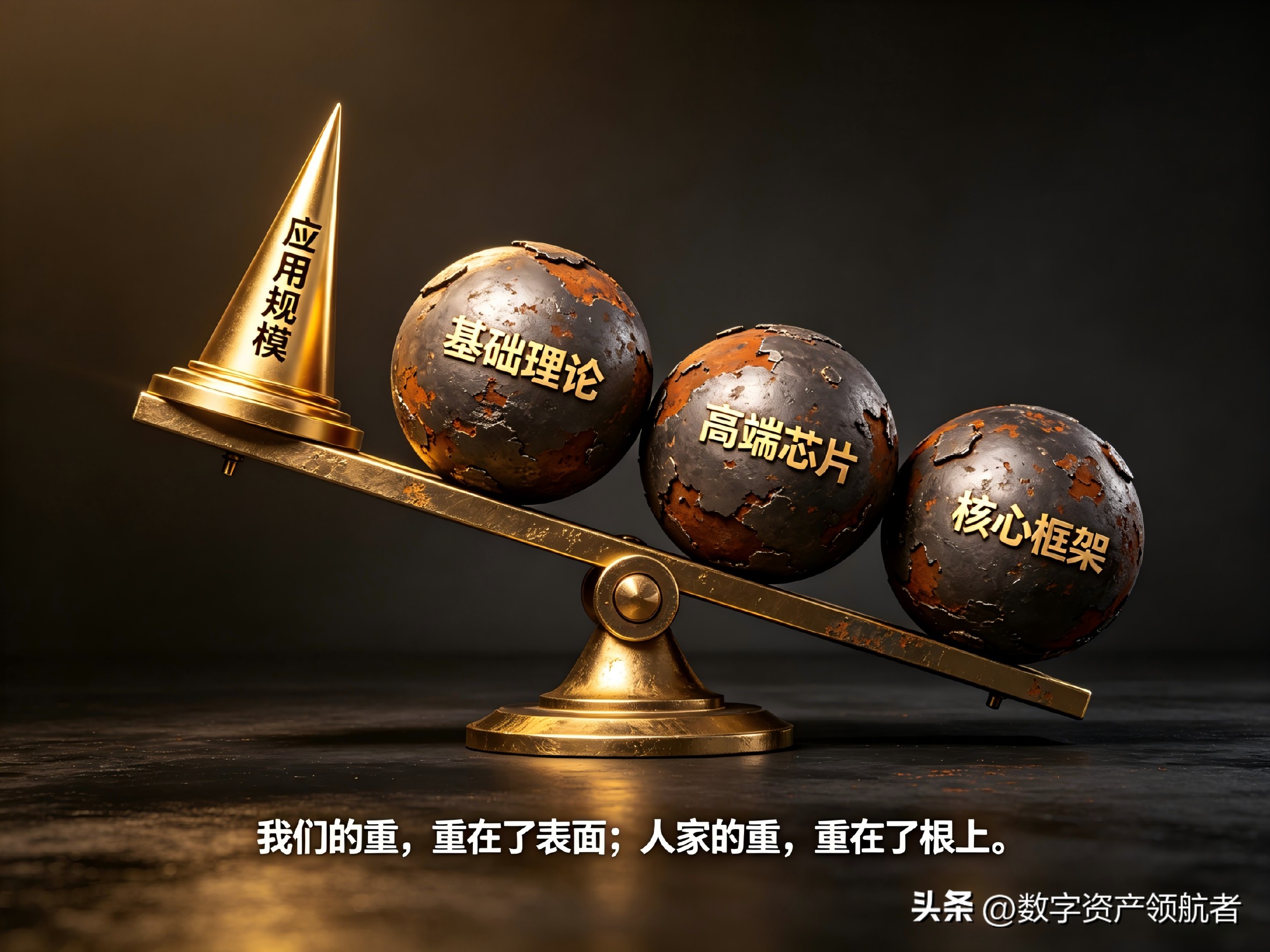
We are a superpower in AI applications but a weak nation in AI foundations. We are the largest and most fearless AI testing ground in the world, but the seeds, fertilizers, and machinery used for these experiments are mostly from others. We are hosting the most luxurious party at the top of a skyscraper, but the foundation of that building is designed with blueprints from other countries and constructed with their steel and concrete.
This is not being first; it feels more like renting a luxury suite and declaring ownership of the entire building.
True ‘world leadership’ will come when the next generation of AI training relies on Chinese chips, original theories proposed by Chinese scientists, and core algorithms invented in China. Until that day arrives, all claims of ‘first’ are mere advertising, not battle reports.
What we need to do is not bury our heads in the sand of propaganda but acknowledge the gaps, and genuinely invest resources, patience, and respect into those who are doing foundational research. Our window of opportunity is truly limited.
Comments
Discussion is powered by Giscus (GitHub Discussions). Add
repo,repoID,category, andcategoryIDunder[params.comments.giscus]inhugo.tomlusing the values from the Giscus setup tool.